World War III
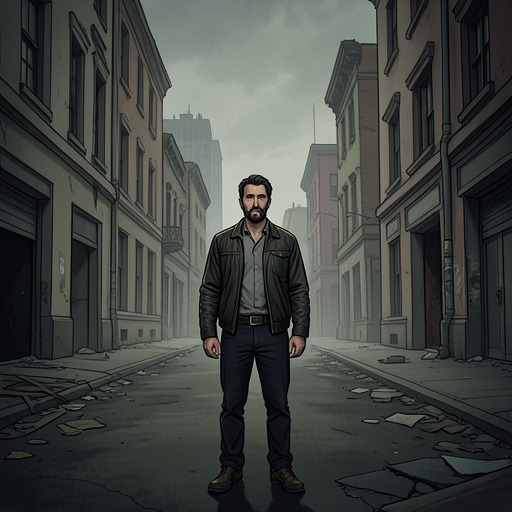
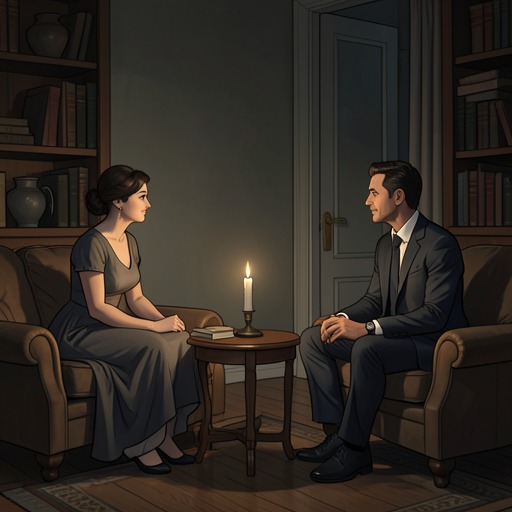
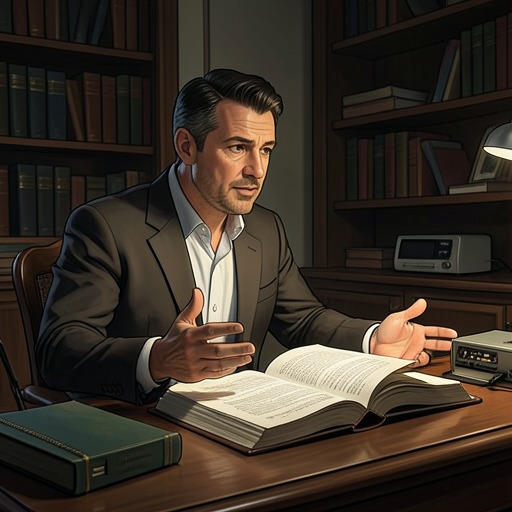
The SilenceWorld War III is the name Martin Dekker gives to a war already under way, though its defining feature is not a visible exchange of nuclear fire but the failure and weaponization of the systems on which ordinary life depends. The conflict combines remotely manipulated launch codes, dysfunctional nuclear weapons, cyberattacks, biological threats, and collapsing power grids; around it, people struggle to tell what is happening from what they fear or remember.## Background and the Failure of Nuclear WarThe account begins from a striking reversal: unknown groups or agencies are manipulating launch codes remotely, yet nuclear weapons worldwide have become dysfunctional. Missiles do not soar over oceans, and bombs are not dropped from supersonic aircraft. The familiar image of nuclear war therefore remains present as an expectation, but its weapons do not perform their intended function. The text does not explain who is behind the manipulation or how the systems were disabled, leaving the disruption itself as the exposed fact and its cause unresolved.The loss of nuclear function does not stop the war. The narrative insists that the conflict continues and that its terms keep accumulating. Instead of a single decisive strike, it names cyberattacks and digital intrusions alongside biological aggression: anthrax, smallpox, and other pathogens. The consequences include death and disability, starvation, and plague. The list moves from attacks on digital systems to threats against bodies and the conditions of survival, making the war seem less like a bounded military operation than a spreading crisis with several interlocking fronts.Power grids collapse as well. That failure joins the already disrupted command systems and biological threats in showing how the conflict reaches beyond battlefields: infrastructure that supports daily life is itself vulnerable. The account offers no stable timeline or comprehensive inventory of damage. Its accumulating phrases instead convey an emergency whose effects are multiplying faster than anyone can fully describe.### War as an Uncertain PresentThe narration presents this conflict through questions as well as declarations. It wonders whether oceans are rising rapidly and the air is warming minute by minute, without confirming either as an effect of the war. This uncertainty matters: the world’s instability is not reduced to a clearly measured military situation, and the characters cannot be sure whether the disturbance lies in nature, perception, or both. The war is real within the scene, but its boundaries and full consequences remain difficult to establish.The account also turns toward memories of earlier conflicts and terrorism, including a shaky video of a person approaching an embassy with a bomb vest strapped to his chest. Those recollections evoke violence that can be seen and felt, set against the less visible disruptions of the present. The narration asks whether the memories carry nostalgia, but does not settle the question. Their presence instead shows how older, recognizable images of violence become a frame through which people attempt to understand a new kind of war.People begin appearing in the streets, first warily and then with a sense of release. Women and men, along with a small cluster of adolescents, walk, look, and wonder; they escort one another through a period described as mass insomnia. This is not a report of organized resistance or a confirmed recovery. It is a change in how people occupy public space: amid disrupted systems and sleepless uncertainty, the streets become a place where people can be together and observe what remains around them.### Martin Dekker Names the ConflictWell past midnight, Martin Dekker tells Diane Lucas and the friends gathered in the living room, “Nobody wants to call it World War III but this is what it is.” The declaration gives a name to the otherwise diffuse crisis, but it does not make the situation more knowable. Around him, the group remains together as he talks; he stands and gestures while the others listen. The scene’s intimate scale contrasts with the worldwide reach of the war he describes.Martin’s voice begins to change. He recites a list of biological weapons and countries that possess them, then breaks into a coughing fit. The others look away; he wipes his mouth with the back of his hand, inspects it, and continues. The gesture brings his talk about germs, genes, spores, and powders close to his own body without establishing that he has been infected. Diane recognizes that he is adopting an accent meant to sound like Albert Einstein speaking English. She is unsure whether his account is fiction: his tone and the censored news he seems able to access leave open the possibility that he knows more than the others do. His speculation about people with phones implanted in their bodies remains speculation, not a confirmed explanation for how information reaches him.### The War and the Next WarMartin’s account sets the present conflict beside Einstein’s forecast of a future one. He recalls Einstein’s statement that “the next major conflict, World War IV, would be fought with sticks and stones.” In Martin’s telling, the dysfunctional nuclear arsenal and the persistence of World War III make that warning more than an abstract historical remark: war has continued, but the forms of its violence have shifted toward digital intrusion, biological attack, and failing infrastructure. The reference does not establish that World War IV has begun; it gives Martin a way to think about what could follow.The juxtaposition also keeps the novel’s emphasis on uncertainty. Martin returns to Einstein and to the Special Theory, dated 1912, while trying to make sense of the present. He imagines walking silently with Einstein across the Princeton campus, even as his attention catches on the empty streets outside. The remembered and the immediate do not resolve into a confident explanation. Instead, the contrast sharpens the central condition of World War III: people are living through a conflict they can name, but cannot fully see, measure, or separate from the technological systems and bodily vulnerabilities that once seemed to protect them.